
Cinema, Literature, and the Nepali Context
Kathmandu, Tuesday, Asar 18, 2081 (Nepali Calendar).
An interaction program titled “Cinema, Literature, and the Nepali Context” was jointly organized by the Nepal Academy (Nepal Pragya-Pratishthan) and the Nepal Film and Cultural Foundation.
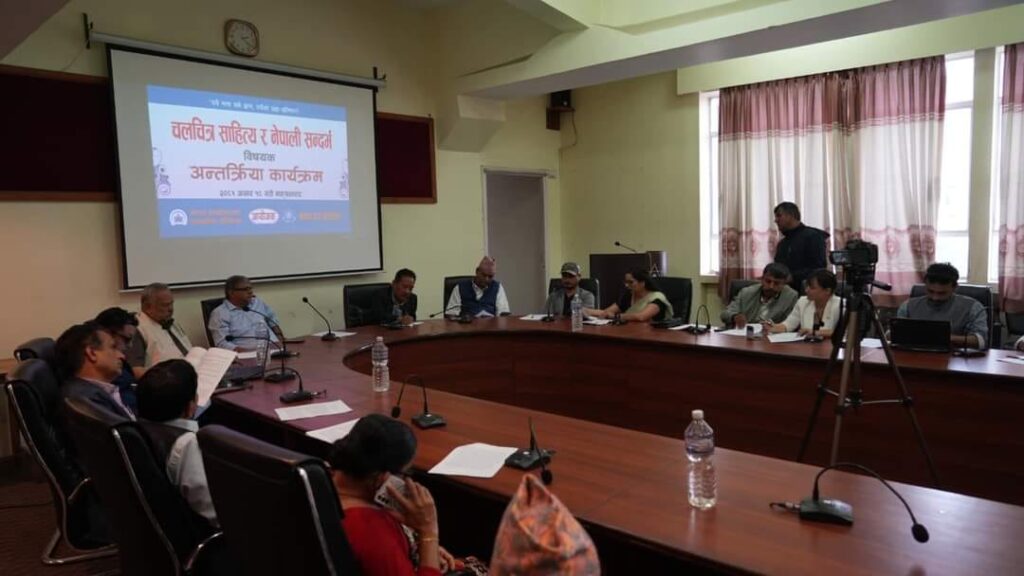
The program was inaugurated by Nepal Academy Chancellor Bhupal Rai, who read out the event banner. In his opening remarks, he emphasized that cinema, in itself, is a sensitive form of literature. Since it is technology-friendly, cinema as a form of literature stands apart from other literary genres. He stated that cinema has the unique ability to help individuals understand themselves—even those who cannot articulate their own stories in writing or speech can gain insights about themselves through cinema.
Member Secretary of the Nepal Academy, Dr. Dhan Prasad Subedi, welcomed participants by highlighting the relevance of the program. He pointed out that, unlike written literature, cinematic literature is enriched by both language and technology, thus making it more accessible and understandable to a wider audience. He stressed the need to be vigilant about preserving the originality and quality of Nepali cinema. He also clarified that this collaboration between the two institutions marks only the beginning of a broader dialogue between cinema and literature.
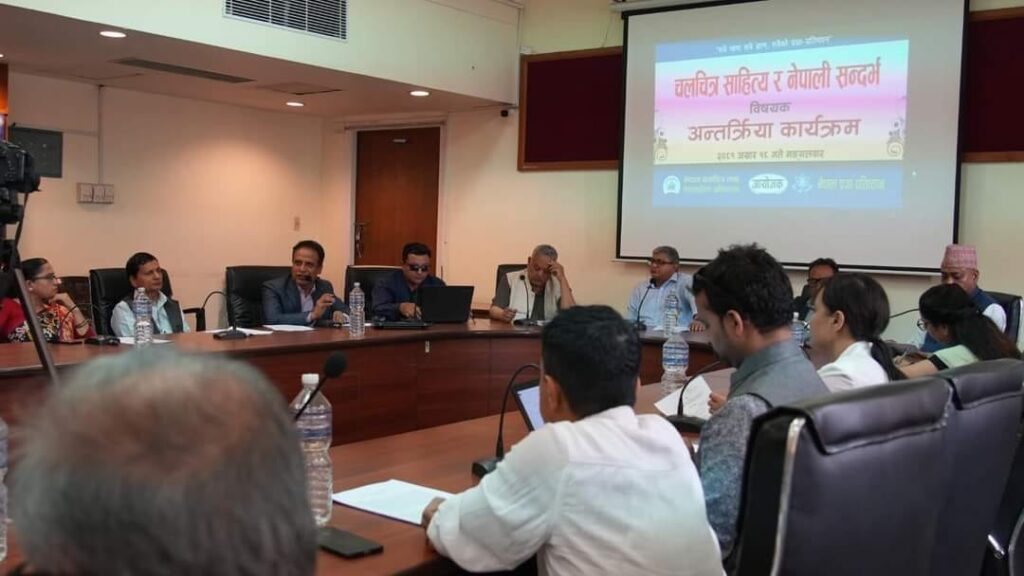
Veteran actor and former member of the Nepal Academy Council, Nir Shah, commented on the working paper presented at the event. He advocated for moving beyond traditional perceptions of literature and art, stating that a screenplay is the heart of a film—and is, therefore, literature itself. Asserting that cinema is a fusion of literature, art, and technology, Shah argued that Harishchandra is the first Nepali film. He emphasized that cinema has the power to deeply touch the emotions of people from all walks of life. He also remarked that due to improper Nepali pronunciation by Indian actors in some films, audiences often feel as though they are watching dubbed content.
Dr. Ashok Thapa, a professor at the Department of Nepali at Tribhuvan University, presented the main working paper on “Cinema, Literature, and the Nepali Context.” He acknowledged that although cinema is a distinct genre, it shares a complementary relationship with literature. He argued that, accordingly, cinema should be theorized in relation to literature. Drawing parallels between the two, he noted that both literature and cinema contribute to cultural formation and societal transformation. While literature expresses stories through the written word, cinema uses images, sound, and visuals. Yet the ultimate goal of both is the communication and expression of ideas and emotions.
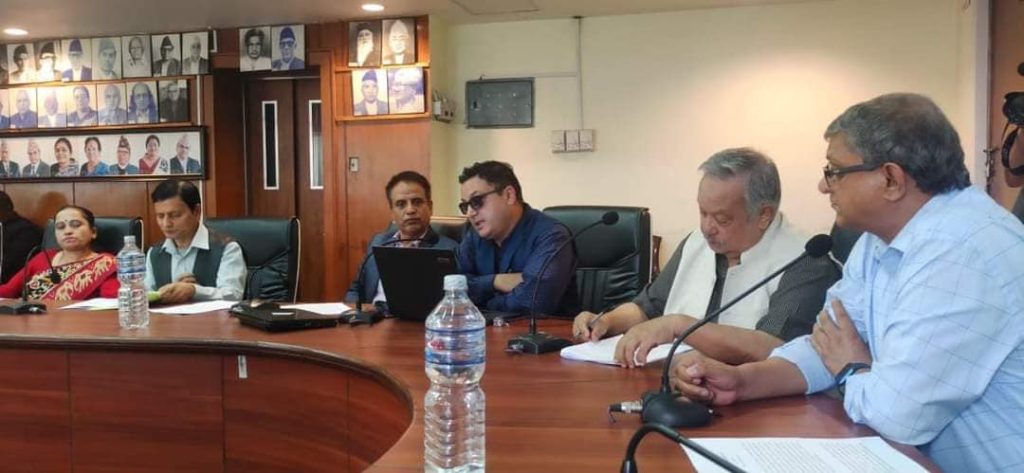
Lyricist and journalist Bhupendra Khadka, commenting on the working paper, noted that while the historical aspects of cinema were explored, the paper fell short in clearly articulating the concept of cinematic literature. Despite the fact that films are made based on literary forms and even become commercially successful, he emphasized the urgent need to question the originality of Nepali films.
Sita Devi Dhungana also provided her commentary on the paper, stating that there needs to be a better harmony between content and writing, which was somewhat unclear in the current presentation. She suggested that the working paper should have more deeply and meaningfully addressed the screenplay as a blend of literature, art, and technical aspects.
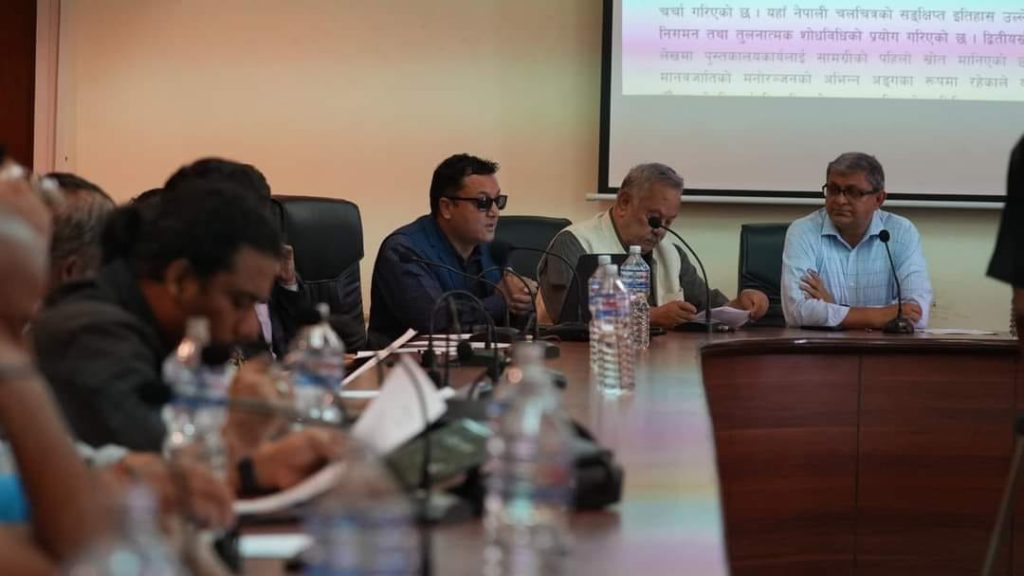
Chairman of the Nepal Film and Cultural Foundation and the session chair, KP Pathak, concluded that although the paper highlighted the relationship between literature and cinema, this discussion series was initiated to establish the idea that cinema, by its very nature, is visual literature. He claimed that a single film can often communicate much more than an entire novel. He emphasized that cinema plays a significant role in shaping society, raising sensitivity, and driving cultural and social transformation.
Among the participants, artist Subash Gajurel, film journalist Vijaya Ratna Tuladhar, and actress Bimala KC shared their queries and reflections. The event was moderated by Sandhya Thapa, a member of the Nepal Film and Cultural Foundation.