
Film and Canvas: Interactive Discussion
A discussion with media, film, and art sector stakeholders on the interrelationship between film and fine arts.
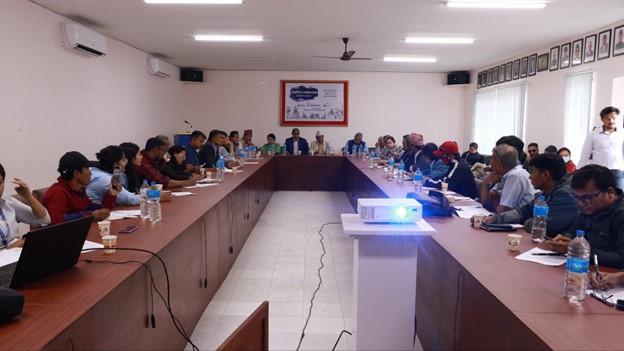
Nepal Film and Cultural Academy recently organized a discussion where various film, media, and fine arts stakeholders gathered to deliberate on the interrelationship between film and fine arts. The participants exchanged their views and ideas on the topic and highlighted the importance of collaboration and mutual understanding between the two fields. They discussed how the film industry could benefit from incorporating elements of fine arts in their work and how the fine arts sector can use film as a medium to reach a wider audience and convey their message effectively. The discussion provided a platform for an insightful and fruitful conversation that emphasized the need for a stronger connection between Nepal’s film and fine arts sectors.
Several film, media, fine arts, and theatre speakers were present at the meeting and shared their views on how to uplift the sector. A total of 10 professionals from their respective fields spoke about their work, the current environment of their work, and how every industry in the film, media, and fine arts could leverage and improve their work through collaboration.
Key Takeaways from the Speakers at the Interaction Session
Deepak Bajracharya | Film Director and Producer
Deepak Bajracharya, a renowned filmmaker, participated in an interactive session on the interrelationship between film and fine arts. During the session, he shared his thoughts on the importance of light in filmmaking and its crucial element in creating a visually engaging film.
Bajracharya explained that film is about interaction with light and reflection. He emphasized that light can significantly affect the final product, and skilled filmmaker understands how to use it to their advantage. The light’s angle, intensity, and color can be used to create a range of emotions, from warmth and intimacy to coldness and distance.
The function of light in films goes beyond just illuminating the actors and setting. It can be used to create a sense of depth, to separate foreground from background, and to highlight some aspects within the frame. Moreover, shooting at different times of the day can drastically affect the lighting and the film’s mood. Bajracharya emphasized the importance of understanding how to use light to enhance the visual language of the film and create a robust and captivating experience for the audience.
Composition, or the arrangement of visual elements within the frame, was another aspect of filmmaking that Bajracharya touched upon during the discussion. He explained how the actors, props, and camera placement can significantly impact how the viewer interprets a scene. A skilled filmmaker understands the importance of composition and uses it to create a visual narrative that enhances the story.

Rakshya Singh Rana | Filmmaker and Editor
During the interactive session on the interrelationship between film and fine arts, Rakshya Singh, an editor and filmmaker, spoke about the often-underestimated role of editing in creating great stories in cinema. She explained that post-production is a crucial part of filmmaking, where the final report is shaped and crafted. Despite their critical role in the final product, Singh emphasized that people need to pay more attention to the significance of editing and post-production.
Singh also talked about the importance of color grading, especially in feature films. She highlighted how color grading can enhance the visual experience for the audience and create a more immersive and engaging atmosphere. Nepali cinema is also becoming more aware of the importance of color-grading, which is a positive development for the industry.
Furthermore, Singh drew a comparison between a painter’s canvas and a filmmaker’s canvas. She explained how painters and filmmakers use their respective canvases to convey their creative vision. Just as a painter adds layers of color and texture to create a painting, a filmmaker uses different elements such as sound, light, and camera movements to create a cinematic experience. Singh stressed that the filmmaker’s canvas truly comes to life in the editing process, and the final vision is realized.
Lastly, Singh emphasized that editing and post-production play a critical role in creating a great film. Color grading and other elements of post-production can enhance the visual experience and create a more immersive atmosphere. Filmmakers must understand the importance of editing and post-production and give it the attention and time it deserves to create the best possible final product.

Ashok Man Singh | Artist
Ashok Man Singh, a painter, and Artist, was one of the participants in the interactive session on the interrelationship between film and fine arts. During the session, he spoke about the importance of colors in painting and how they can significantly impact the final product.
Singh explained how colors can affect the mood of a painting and how different color combinations can convey other stories. He emphasized the importance of selecting the right colors and varieties to get the desired emotions and messages. Singh stressed that understanding the psychology of colors is crucial to create a compelling and impactful painting.
Moreover, Singh discussed how colors can affect the psychology of people. He explained how certain colors can evoke specific emotions, such as red being associated with passion and excitement and blue being associated with calmness and serenity. Singh noted that understanding the psychology of colors is essential in painting and other creative fields such as film and advertising.
Furthermore, Singh emphasized the importance of conveying emotions through colors. He explained how colors can express emotions like happiness, sadness, anger, and fear. Singh stressed that skilled artists could effectively use colors to convey emotions and positively impact the viewer.

Kapil Parajuli | Colorist
During the interactive session on the interrelationship between film and fine arts, film colorist Kapil Parajuli shared his insights on the importance of colors in cinema. Parajuli explained that using color is crucial for movies, as it can significantly affect the mood and tone of a film. He noted that while this is one of the final steps of post-production, the Nepali film industry still needs to understand the importance of colors.
Parajuli discussed the difference in how colors are used in painting versus in films. He explained that in pictures, artists can directly pick the colors they want to use from nature and apply them to the canvas. However, the process in cinema is different as the colors used are often non-natural. Parajuli noted that all the colors that humans see could be used for a painting, but in the case of cinema, colors need to be compromised through chemical or digital processes.
Parajuli also discussed the Nepali film industry’s struggle to understand the importance of color grading and color correction in films. He stressed that these processes are crucial in achieving a film’s desired look and feel and that proper color grading and color correction are necessary to stay within its potential.
Nirjal Shrestha | Art Director
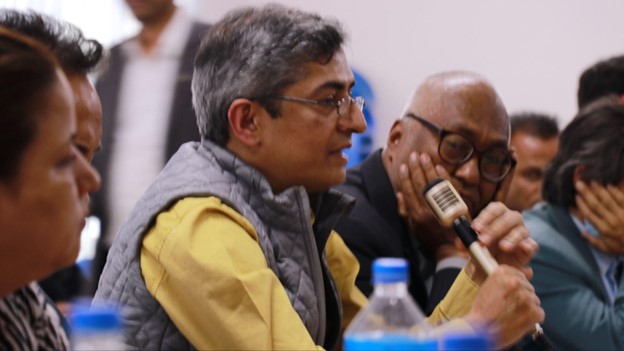
In the session on the interrelationship between film and fine arts, artist Nirjal Shrestha shared his insights on the similarities between painting and film. Shrestha discussed how, while artwork, a single canvas is used to create a visual story, whereas, in films, several canvases are used to tell a story. He emphasized that in both art forms, the goal is to create multidimensional characters with depth and complexity.
Shrestha explained that in films, the characters are developed through a canvas, where their past experiences and actions are used to shape their present and future. He highlighted the importance of understanding the character’s motivations and backstory to create a rich and nuanced portrayal of them on screen, similar to how an artist would add depth and layers to their painting.
Furthermore, Shrestha spoke about the importance of understanding the film’s historical context and using props accordingly. He explained how the use of props can add to the authenticity of a movie, providing visual cues that ground the story in a specific time and place.

Tsehring Ritar Sherpa | filmmaker
Tsering Ritar Sherpa shared his insights on the need for filmmakers to have a long-term vision to create impactful films. He emphasized the importance of teamwork and collaboration among the entire crew and actors to work towards a singular vision.
Sherpa drew parallels between painting and film, highlighting the storytelling aspect of Buddhist Thanka paintings. He explained how these paintings depict Buddha’s entire life story, showcasing the story’s depth and complexity through vivid visuals. Sherpa encouraged filmmakers to draw inspiration from this art form and aim to create stories as vivid and impactful as the Thanka paintings.
Furthermore, Sherpa spoke about the importance of having a clear message and theme in a film. He stressed the need for filmmakers to understand their story’s social and political context and convey a meaningful message to the audience. Sherpa emphasized that filmmakers should focus on creating stories that impact the audience and leave a lasting impression.

Nisha Sharma | Theatre Artist
During the interactive session on the interrelationship between film and fine arts, a veteran theatre artist, Nisha Sharma, shared her insights on the importance of costumes and set design in films.
Sharma emphasized the need for films to create better costumes that are authentic to the story and the characters. She explained how costumes can help to bring the characters to life and add depth to their personalities. By paying attention to the details of costumes, filmmakers can help to create a more coherent and authentic story.
Additionally, Sharma spoke about the importance of set design in films. She stressed the need for filmmakers to create original and accurate sets of the time and place of the story. By creating an actual location, filmmakers can transport the audience into the story’s world and add to the film’s overall impact.
Sharma drew on her experience in theatre to emphasize the importance of attention to detail in creating an immersive experience for the audience. She encouraged filmmakers to pay close attention to every aspect of their film, from the costumes to the set design, to create a more cohesive and impactful story.
Neer Shah | Actor
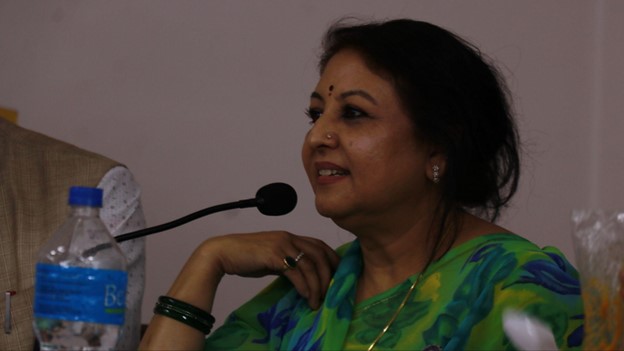
During the discussion, Neer Shah, a veteran actor, and producer, shared his insights on using color in films. He talked about the psychological impact of color and how filmmakers can use it to convey a particular message to the audience. He also drew comparisons between the solitary process of making a painting and the collaborative nature of filmmaking, emphasizing how ideas from both disciplines can cross-pollinate to create great works. Neer Shah also shared how his life has been influenced by performing and fine arts and contributed to making some fantastic animation films worldwide.
Neer Shah also emphasized the importance of cinema, drawing inspiration from the centuries-old practice of fine arts. He spoke about how cinema is a relatively new form of art compared to fine arts and how it could benefit from incorporating the learnings from fine arts. By doing so, he believed filmmakers could create more meaningful and impactful works of art that could resonate with audiences on a deeper level.
Naradmani Hartamchali | Acamedician, Fine Art Academy)
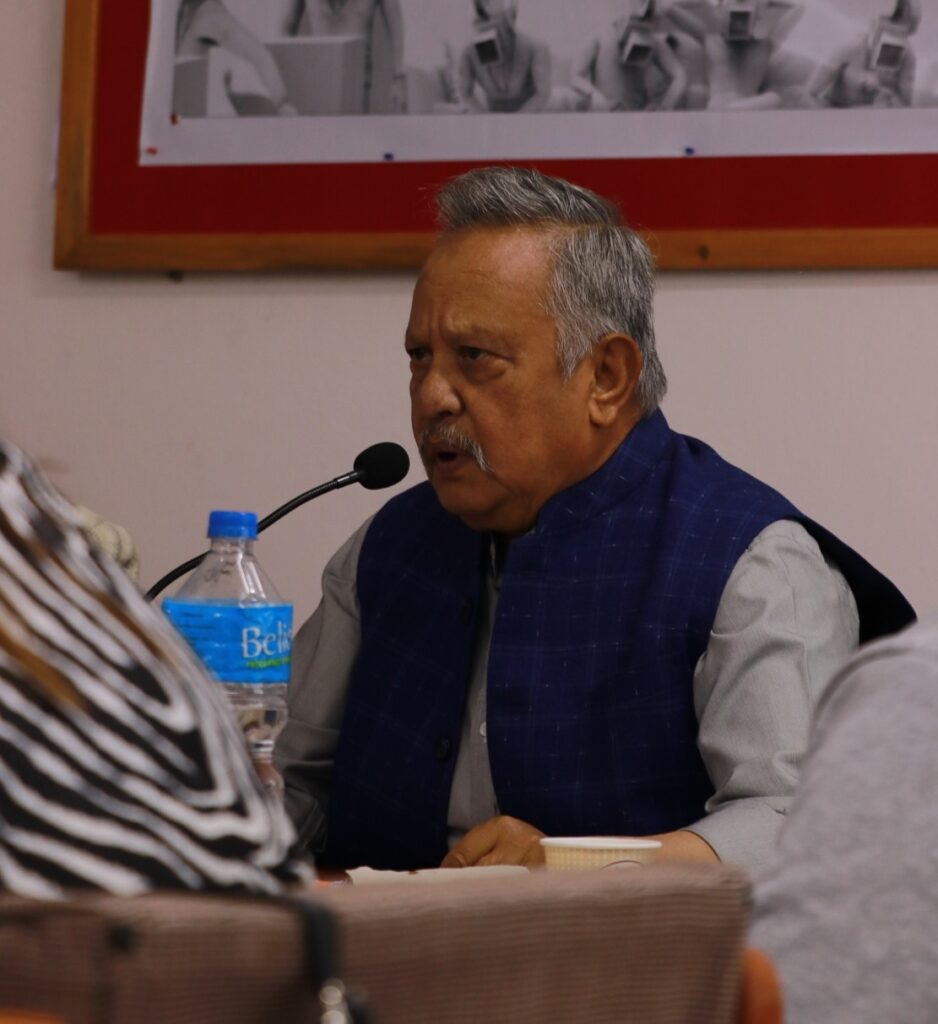
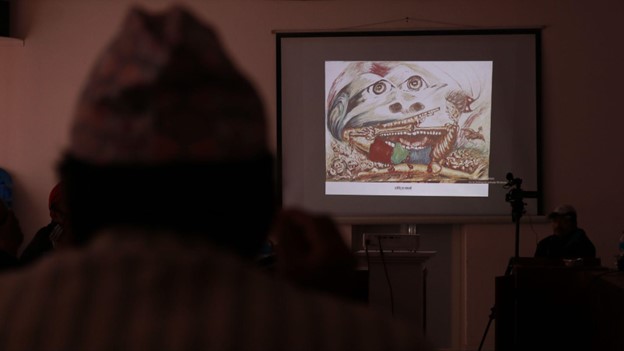
Naradmani Hartamchali shared his thoughts on how art can be a powerful medium to showcase our history and contemporary times. He gave a visual presentation of his artwork, explaining the motivation behind each piece and its creation. He also presented the works of other artists and helped the audience understand the complex thought process and intention behind each piece. Through his presentation, Hartamchali emphasized the importance of storytelling through art and how it can inspire and educate people about various social and cultural issues.
Conclusion
In conclusion, the interactive session conducted by Nepal Film and Cultural Academy brought together a diverse group of stakeholders from the film, media, and fine arts industries to discuss the interrelationship between film and fine arts. Through the discussions, it was evident that the role of colors, composition, and visual storytelling techniques is crucial for both painting and filmmaking. The experts emphasized the need to understand the historical context of the film and the importance of teamwork to create a coherent vision. The session also highlighted the need to draw inspiration from fine arts, as they have been practiced for centuries and have much to offer to the relatively new form of art, cinema. Overall, the session proved to be insightful, emphasizing the importance of incorporating fine arts in filmmaking and how the two can borrow from each other to create impactful and thought-provoking films.